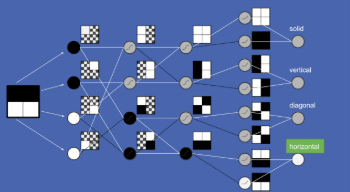
Neural networks function by simulating the structure of the human brain, employing interconnected layers of nodes to process information. Each layer consists of input, hidden, and output neurons that transmit signals and apply activation functions. The training process involves data preprocessing and various learning techniques to discern patterns. This intricate system raises questions about the underlying mechanisms and their implications in diverse fields. What drives their ability to model complex relationships effectively?
Understanding Neural Network Architecture
Neural network architecture serves as the foundational framework that dictates how information is processed within the system.
It consists of various layer types, including input, hidden, and output layers, each contributing to the overall functionality. Neuron connectivity within these layers determines the pathways through which data flows, influencing the network’s ability to learn and adapt.
Understanding this architecture is crucial for optimizing neural network performance.
The Training Process: Learning From Data
A comprehensive understanding of the training process is essential for leveraging the capabilities of neural networks. This involves meticulous data preprocessing to ensure quality input.
Various training techniques, such as supervised, unsupervised, and reinforcement learning, guide the model in identifying patterns and making predictions. Ultimately, the efficiency of these processes directly influences the performance and generalization of the neural network.
Activation Functions and Their Role
Activation functions serve as critical components within neural networks, determining how and when a neuron fires in response to input signals.
Different activation types, such as sigmoid and ReLU, facilitate nonlinear transformations, enabling the network to capture complex patterns.
These functions introduce essential nonlinearity, allowing for the modeling of intricate relationships in data, which is fundamental to the performance of neural networks in various applications.
See also: How GPS Technology Works
Real-World Applications of Neural Networks
As industries increasingly rely on data-driven decision-making, the application of neural networks has expanded into various domains, demonstrating their versatility and effectiveness.
Notably, neural networks excel in image recognition, enabling advancements in security and healthcare.
Additionally, their capabilities in natural language processing facilitate improvements in customer service and content generation, showcasing their transformative potential across multiple sectors and applications.
Conclusion
In the grand scheme of artificial intelligence, neural networks are celebrated for their remarkable ability to mimic human cognition. Ironically, while these complex algorithms tirelessly analyze vast datasets to uncover patterns, they remain blissfully unaware of the very nuances of human thought they strive to emulate. As they advance in applications ranging from image recognition to natural language processing, one must ponder: can these sophisticated systems truly grasp the essence of intelligence, or are they merely sophisticated mirrors reflecting our own understanding?