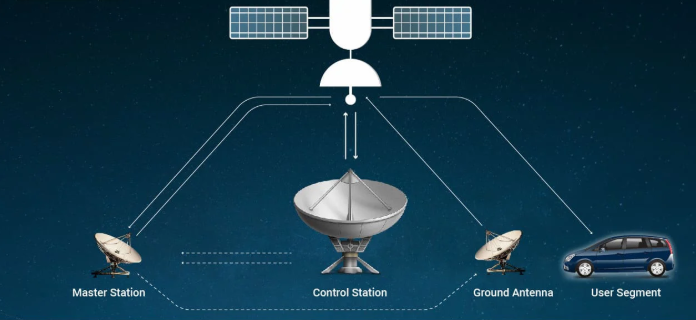
GPS technology relies on a sophisticated network of satellites that transmit signals to Earth. These signals are captured by GPS receivers, which then calculate their precise location using triangulation. This process involves measuring the time it takes for signals to travel from multiple satellites. Understanding how this technology operates reveals its significant impact on navigation and various applications. What happens when these systems face challenges, and how do they adapt to ensure accuracy?
The Basics of GPS Technology
Global Positioning System (GPS) technology relies on a network of satellites orbiting the Earth to provide accurate location information.
By utilizing satellite positioning, GPS achieves remarkable GPS accuracy, allowing users to pinpoint their location anywhere on the globe.
This technology empowers individuals with the freedom to navigate confidently, enhancing travel, exploration, and outdoor activities while ensuring precise guidance at all times.
How GPS Signals Are Transmitted
GPS signals are transmitted from a constellation of satellites, which continuously send radio waves towards the Earth’s surface.
This GPS signal transmission operates at specific signal frequencies, typically around 1.57542 GHz for civilian use.
The precise timing and modulation of these signals allow GPS receivers to interpret the data, providing users with reliable information about their location and movement.
Calculating Your Exact Location
To accurately determine a user’s location, GPS receivers utilize the signals broadcasted by multiple satellites.
By employing satellite triangulation, these devices measure the time it takes for signals to reach them, calculating distances to each satellite.
This process enhances location accuracy, allowing users to pinpoint their exact position on Earth.
Such precision empowers individuals to navigate freely and confidently in various environments.
See also: How Generative AI Is Reshaping Content Creation
Applications of GPS in Daily Life
Numerous applications of GPS technology enrich daily life, transforming how individuals navigate and interact with their surroundings.
Navigation apps facilitate efficient route planning and real-time traffic updates, empowering users to explore freely.
Additionally, fitness tracking devices utilize GPS to monitor outdoor activities, enabling individuals to set goals and enhance performance.
This integration of GPS fosters a more connected and active lifestyle.
Conclusion
In summary, GPS technology plays a pivotal role in modern navigation and various applications, from enhancing outdoor adventures to providing real-time traffic updates. Remarkably, over 4 billion GPS devices are currently in use worldwide, highlighting the technology’s integral presence in daily life. As advancements continue, GPS will likely evolve, offering even more precise and innovative solutions for users globally. Understanding its workings can enhance appreciation for this remarkable technology that connects people and places seamlessly.